Beneath the skin
Subcutaneous fat lies just under the skin.
YOUR POT BELLY & YOUR HEALTH
Excess abdominal fat can carry health risks. Understanding them is a medical task.
Central adiposity is associated with a higher risk of type 2 diabetes, high blood pressure and cardiovascular disease. NICE assessment guidance
BEYOND APPEARANCE
Where fat is stored matters, not just your weight. Fat deep in the abdomen and in the liver is linked to metabolic risk in ways that differ from fat beneath the skin. Clinical Liver Disease review
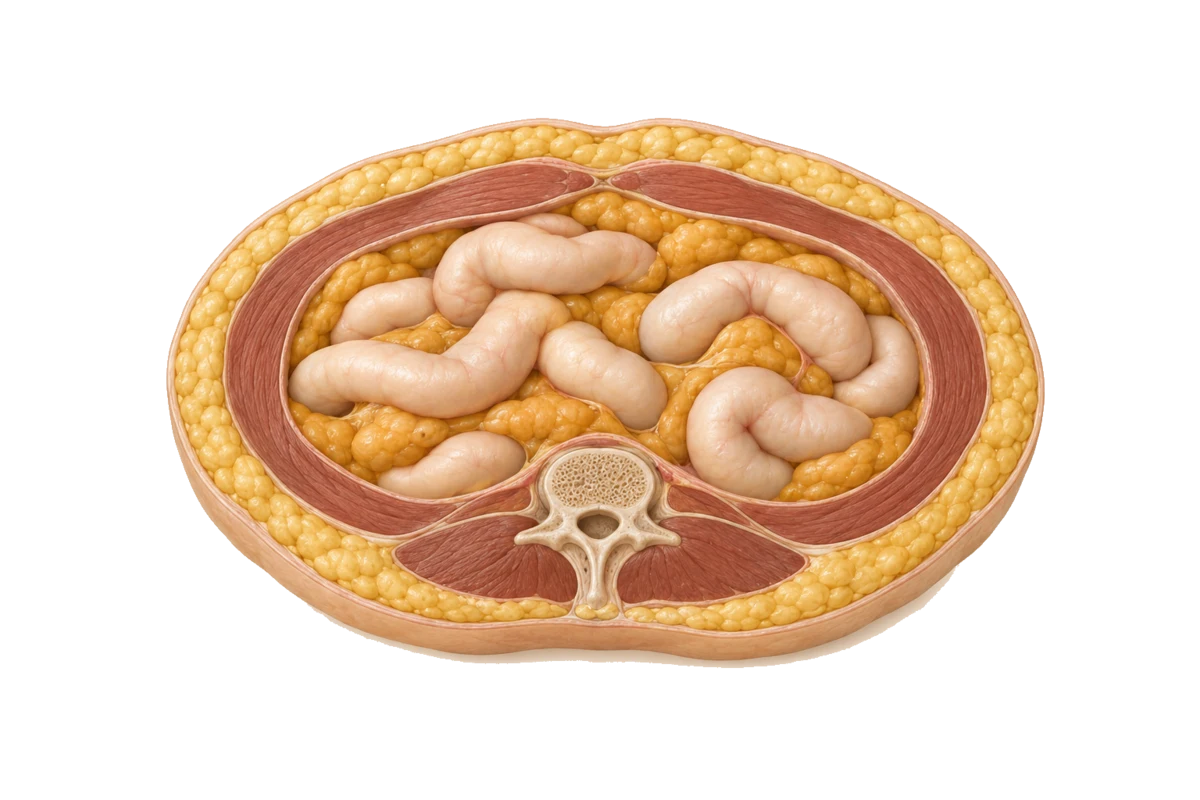
Subcutaneous fat lies just under the skin.
Visceral fat surrounds internal organs. Higher amounts are linked with insulin resistance and cardiovascular risk. Clinical Liver Disease
Fat can also build up in organs such as the liver. Weight or waist size alone cannot show where your fat is stored.
A DIFFERENT QUESTION
Bloating can make the abdomen feel full or look bigger. Causes include gas, constipation, food intolerance and other digestive conditions. NHS guidance on bloating
Tell your doctor if your abdominal size changes during the day, comes with discomfort or persists. Not every abdominal change is fat.
Persistent bloating deserves medical review. Sudden severe abdominal pain needs urgent medical assessment, not a WhatsApp enquiry.
WHY IT MATTERS
Excess visceral fat is associated with insulin resistance, unhealthy blood-fat patterns and inflammation linked to cardiovascular disease. AHA scientific statement
Abdominal obesity is a cardiovascular risk marker, independent of BMI. American Heart Association High blood pressure, abnormal cholesterol and raised blood glucose add to that risk. NIDDK
Excess visceral fat is linked to insulin resistance, and central adiposity to a higher risk of type 2 diabetes. Visceral adiposity review Your results, not your appearance, guide the next step.
Metabolic dysfunction-associated steatotic liver disease (MASLD) is more common in people with obesity or type 2 diabetes. Some people develop inflammation and scarring; severe liver damage is not inevitable. NIDDK liver health
Obesity increases the risk of obstructive sleep apnoea. Tell your doctor about loud snoring, pauses in breathing or daytime sleepiness. NIDDK
High blood pressure, high triglycerides and low HDL cholesterol usually cause no symptoms. NHLBI The aim is to assess your individual risk, not to assume disease from appearance.
Higher body fatness is associated with a higher risk of several cancers, including colorectal, pancreatic, endometrial and postmenopausal breast cancer. National Cancer Institute
This is population-level evidence, not a diagnosis from abdominal appearance. The Pot Belly Clinic is not a cancer-screening service; screening belongs in your wider medical care.
Obesity is associated with osteoarthritis and can increase the load on joints. NIDDK joint health Pain and mobility are worth discussing, but improvement is an individual goal, not a guaranteed outcome.
THE INDIAN / SOUTH ASIAN CONTEXT
People of South Asian background can develop cardiometabolic risk at a lower BMI. NICE recommends considering ethnic background and central adiposity, rather than relying on BMI alone. NICE NG246
That is a reason to assess carefully, not to assume that every Indian patient has metabolic disease.

MEASURE. INTERPRET. DECIDE.
Some metabolic risks cause no symptoms. Measurements and investigations help show what needs attention. NHLBI assessment guidance
We interpret the findings alongside your medical and family history, current medicines and concerns.
| Marker | Threshold or qualifying treatment |
|---|---|
| Waist circumferenceSouth Asian adults | Men: ≥90 cm Women: ≥80 cmIndian Journal of Medical Research |
| Blood pressure | Systolic ≥130 OR diastolic ≥85 mmHgOr antihypertensive treatment for previously diagnosed hypertension.Consensus criteria |
| Fasting plasma glucose | ≥100 mg/dLOr drug treatment for elevated glucose.Consensus criteria |
| Triglycerides | ≥150 mg/dLOr specific drug treatment for elevated triglycerides.Consensus criteria |
| HDL cholesterol | Men: <40 mg/dL Women: <50 mg/dLOr specific drug treatment for reduced HDL cholesterol.Consensus criteria |
Under the harmonised criteria, any three of these five findings meet the criteria for metabolic syndrome. A raised waist measurement is not compulsory. Joint consensus statement
These criteria are not a diagnosis of diabetes or high blood pressure, and they do not decide whether medication is right for you. Your endocrinologist assesses that.
PERSONAL CONCERNS. MEDICAL QUESTIONS.
These concerns deserve a respectful conversation, not embarrassment.
Erectile dysfunction can be associated with obesity, diabetes, vascular disease or hormone problems; medicines and psychological factors can also contribute. NIDDK causes of ED
The American Urological Association identifies ED as a risk marker for cardiovascular disease that may warrant evaluation. It is not proof of heart disease in an individual. AUA guideline
Obesity is also associated with low testosterone in men. Diagnosis needs relevant symptoms and consistently low levels on appropriate blood tests. Endocrine Society
Changes in libido, periods, fertility or urinary symptoms also belong in the conversation.
FOR MEN AND WOMEN
Younger adulthood, midlife and later life bring different priorities. We consider your circumstances rather than treating age, gender or appearance as the full explanation.
For women, this may include menstrual history, pregnancy plans, menopause and conditions such as polycystic ovary syndrome. PCOS is associated with a higher risk of type 2 diabetes, regardless of age and BMI. International PCOS guideline

NEXT